
Banana Palms: Growing and Propagating Bananas in a Tropical-Inspired Garden
Learn how banana palms grow, spread, and thrive. A practical guide to planting, care, and propagation for tropical-style gardens.
2/4/20263 min read
Banana Palms: What They Really Are
Despite the name, banana “palms” are not palms at all. They belong to the genus Musa and are fast-growing, herbaceous perennials with a pseudostem made of tightly packed leaf bases.
That distinction matters—because bananas grow, reproduce, and recover very differently than palms or woody trees.
In tropical-inspired landscapes, bananas are valued for:
Massive leaves and instant canopy
Fast growth (often visible week-to-week)
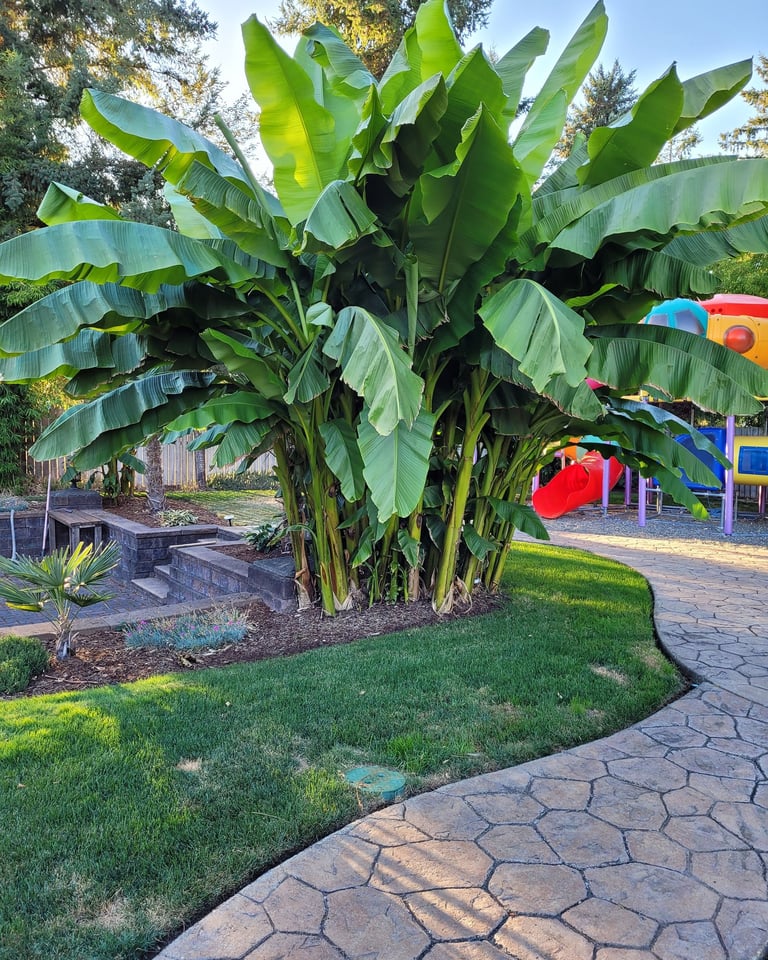
Natural clumping and self-propagation
Strong visual contrast with palms and accent plants
They are often used as seasonal focal plants, privacy screens, or lush backdrops behind hardscape features.
➡️ Tropical Living & Design – how large-leaf plants shape outdoor atmosphere
➡️ Cold Harty Palm Guide – pairing bananas with structural palms
Choosing the Right Banana Variety
Not all bananas are grown for fruit—many are purely ornamental. Typically, in the Pacific Northwest the growing season in not long enough to produce fruit. I have seen plants produce very small, not eatable fruit. My plants have never produced fruit.
Common Types for Home Landscapes
Musa basjoo – Extremely vigorous, cold-tolerant roots, ornamental
Musa acuminata – Parent species of many edible bananas
Dwarf Cavendish – Compact size, popular for containers
Red Banana (Musa velutina) – Ornamental color and form
When selecting a banana plant, consider:
Final height (6 ft vs 15+ ft)
Container vs in-ground planting
Cold protection needs
Space for natural spread
Growing Banana Palms Successfully
Sunlight
Bananas prefer full sun (6–8 hours daily). In cooler climates, maximum sun exposure dramatically improves growth rate and leaf size. You will see smaller plants with less sunlight.
Soil
Bananas are heavy feeders and demand:
Rich organic matter
Excellent drainage
Consistent moisture
Ideal soil blends include compost, aged manure, and coarse material for airflow.
Water
Large leaves mean high transpiration. Bananas:
Dislike drought stress
Respond immediately to consistent irrigation
Benefit from deep, regular watering
Mulching is strongly recommended to stabilize moisture and soil temperature.
Growth Cycle: What to Expect
A banana plant grows in stages:
Vegetative growth – Rapid leaf production
Maturity – Thickened pseudostem
Flowering & fruiting – Occurs once per stem, not typically in the Pacific Northwest.
Dieback – The fruiting stem dies naturally
Importantly: the plant does not die—the root system continues producing new shoots.
This cycle is what makes propagation so reliable.
Banana Propagation: How Bananas Multiply
What Are Banana “Pups”?
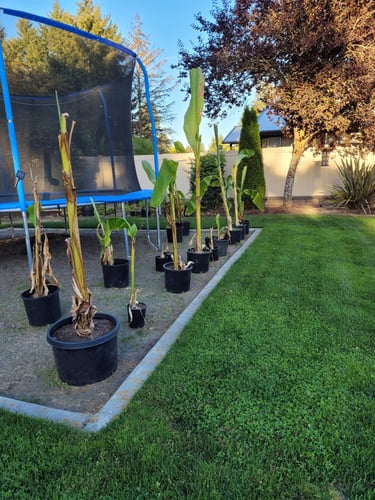
Bananas reproduce via basal offshoots, commonly called pups, I have also heard them referred to as Daughters. These emerge from the underground rhizome.
There are two main types:
Sword suckers – Narrow leaves, strong roots (preferred)
Water suckers – Broad leaves, weaker attachment
How to Propagate Banana Pups
Select a sword sucker at least 12–24 inches tall
Dig carefully to expose the connection point
Separate with a clean, sharp tool
Replant immediately in rich, moist soil
Propagation is best done during active growth periods.
Cold, Wind, and Seasonal Care
Bananas are more resilient than they appear—but leaves are sacrificial.
Wind tears leaves easily
Cold damages foliage before roots
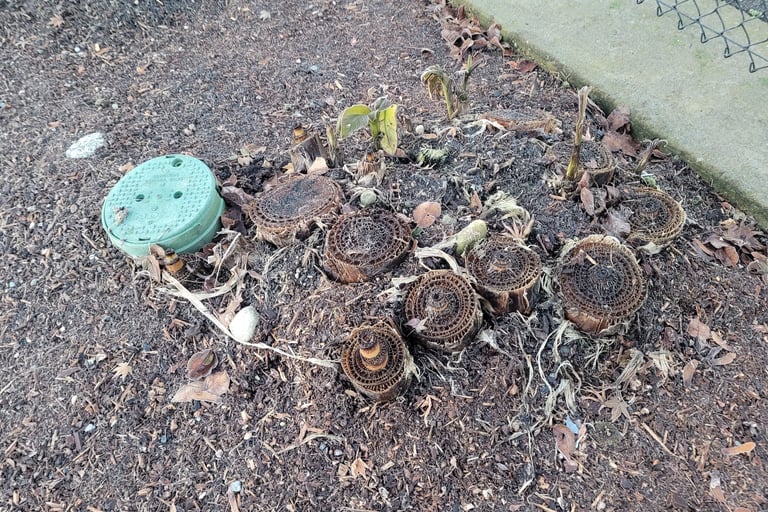
Stems may collapse in frost but regrow from the base
In marginal climates, bananas are often treated as die-back perennials rather than permanent trunks. Roots never die. Plants need to be cut back after the first major freeze.
Using Bananas in Tropical Living Design
Bananas are best used to:
Create instant “jungle” scale
Soften fences and structures
Anchor outdoor seating areas
Frame pools, patios, or walkways
They pair especially well with:
Windmill palms
Needle palms
Cannas, colocasia, and gingers
Landscape lighting for nighttime drama
➡️ Designing a Tropical Retreat
Final Thoughts
Banana palms are not delicate novelties—they are vigorous, forgiving, and visually transformative plants when grown with intention.
Whether used for seasonal impact or long-term clumping structure, bananas bring movement, scale, and unmistakable tropical character to any landscape.
Propagating Banana Palms
Contact Us
info@pacificnorthwesttropics.net
© 2025. All rights reserved.
About us
At Pacific Northwest Tropics we promote tropical living in sub-tropical climates. Featuring Plant Guides, Landscaping ideas, Merchandise, Gift ideas, and Palm Tree sales. With a focus on providing the ultimate tropical vibe.
Terms and Conditions
Affiliate Disclosure
Some links on this site may be affiliate links. As an Amazon Associate I earn from qualifying purchases.