
How to Transplant a Palm Tree Without Killing It
Transplanting a palm tree can feel intimidating. Palms don’t respond to root disturbance the same way typical trees do, and improper handling can lead to shock, slow decline, or outright failure. The good news is that palms transplant very well when the process is done correctly—even in cooler climates like the Pacific Northwest. This guide walks through the correct way to transplant a palm tree step by step, explains why palms are different, and outlines proven techniques to maximize survival.
1/23/20262 min read
Why Palm Trees Are Different From Other Trees
Unlike hardwood trees, palms:
Do not regenerate damaged roots
Rely on a limited root initiation zone near the trunk base
Are more sensitive to water stress after transplanting
This means success depends less on root mass and more on timing, handling, and aftercare.
Best Time to Transplant a Palm Tree
Ideal Timing
Late spring through early summer is best
Soil temperatures should be consistently above 55°F
Avoid transplanting during winter dormancy or extreme heat
In the Pacific Northwest, May through July is the optimal window.
Tools & Materials You’ll Need
Sharp shovel or spade
Pruning saw (for larger palms)
Burlap or tarp
Soft rope or tree straps
Well-draining soil mix
Mulch
Water source
Step-by-Step: How to Transplant a Palm Tree
1. Prepare the New Planting Hole First
Before digging up the palm:
Dig a hole twice as wide as the expected root ball
Depth should match the original planting depth
Ensure excellent drainage
Never let a palm sit exposed while you prepare the hole.
2. Prune Fronds to Reduce Stress
Remove ⅓ to ½ of the fronds
Tie remaining fronds upward
This reduces water loss while roots reestablish.
3. Dig the Root Ball Carefully
Start digging 12–24 inches from the trunk
Dig straight down, then under
Preserve as much of the root initiation zone as possible
Palms don’t need a massive root ball—but clean cuts matter.
4. Lift and Transport Properly
Lift by the root ball, never the trunk
Wrap roots in burlap if exposed
Minimize time out of the ground
Avoid dropping or twisting the trunk—internal damage is permanent.
5. Plant at the Correct Depth
Position the palm so the root flare matches original depth
Backfill with native soil (not pure compost)
Firm gently—do not compact heavily
Planting too deep is a common cause of failure.
6. Water Thoroughly
Water immediately after planting
Saturate the root zone completely
Eliminate air pockets
Post-Transplant Watering Schedule
For the first 8–12 weeks:
Water deeply 2–3 times per week
Keep soil moist but never soggy
After establishment:
Reduce frequency but water deeply
Special Considerations for Cold Climates
In the Pacific Northwest:
Apply 3–4 inches of mulch
Protect the palm during its first winter
Avoid fertilizing until new growth appears
Cold + transplant stress is the #1 killer—timing matters.
Fertilizing After Transplanting
Do not fertilize immediately.
Wait until:
New spear growth is visible
At least 6–8 weeks have passed
Use a palm-specific fertilizer with micronutrients.
We use a 16-16-16 fertilizer twice a year.
Signs of Transplant Shock (and What’s Normal)
Normal after transplanting:
Lower fronds yellowing
Slow growth for several months
Warning signs:
Spear pull - I've seen many palms recover from spear pull
Soft or foul-smelling crown
No new growth after an entire growing season
Palms That Transplant Best in the PNW
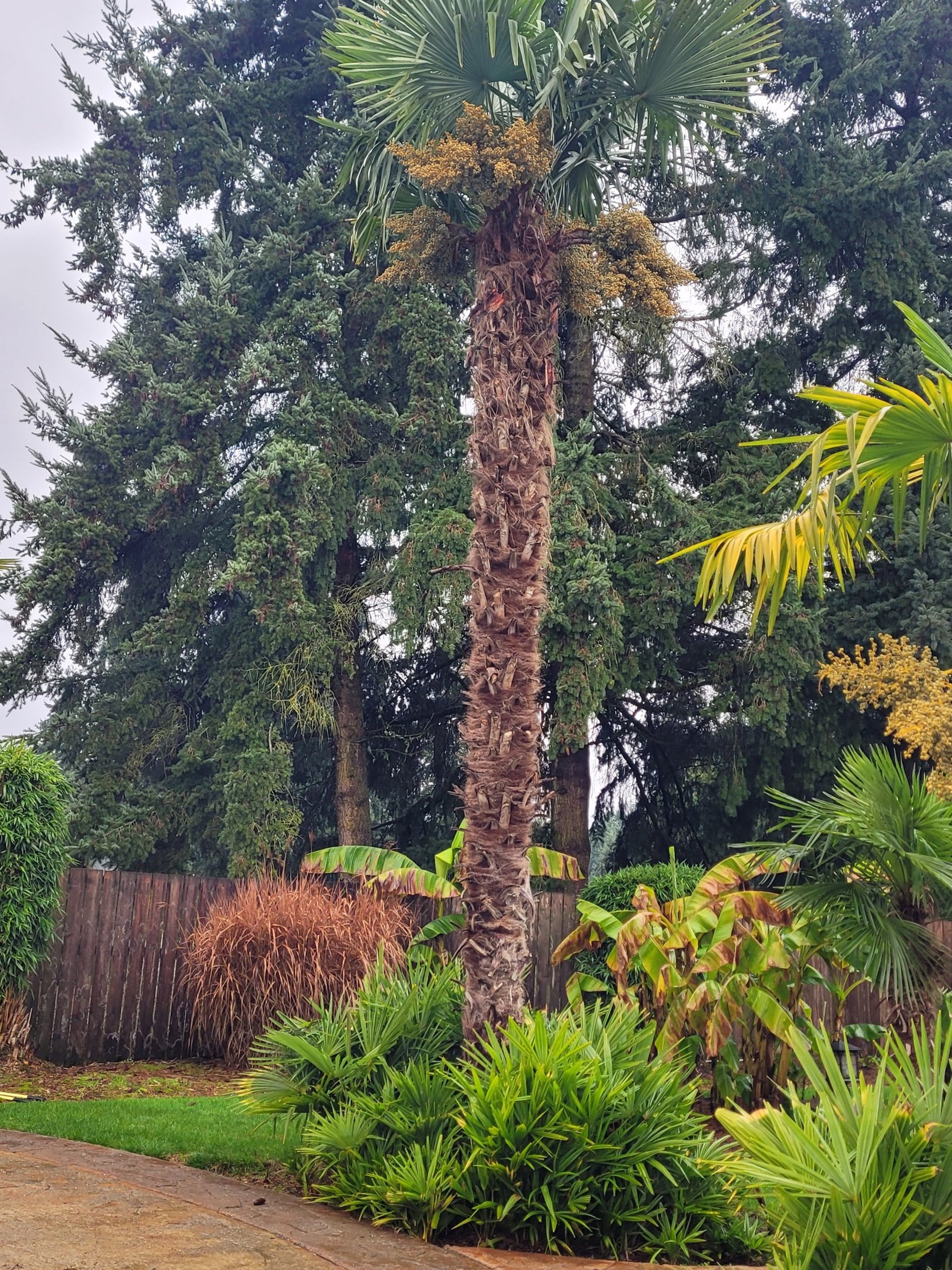
Windmill Palm (Trachycarpus fortunei)
Needle Palm (Rhapidophyllum hystrix)
European Fan Palm (Chamaerops humilis)
Dwarf Palmetto (Sabal minor)
These species tolerate root disturbance better than most.
Final Thoughts
Transplanting a palm tree isn’t about brute force—it’s about precision, timing, and patience. When handled properly, palms often establish faster than traditional trees and can thrive for decades in their new location.
Done right, transplanting gives you flexibility in garden design without sacrificing plant health—especially important in Pacific Northwest landscapes where microclimates matter.
Contact Us
info@pacificnorthwesttropics.net
© 2025. All rights reserved.
About us
At Pacific Northwest Tropics we promote tropical living in sub-tropical climates. Featuring Plant Guides, Landscaping ideas, Merchandise, Gift ideas, and Palm Tree sales. With a focus on providing the ultimate tropical vibe.
Terms and Conditions
Affiliate Disclosure
Some links on this site may be affiliate links. As an Amazon Associate I earn from qualifying purchases.